Apple MacBook Pro 16-inch M3 Max vs ASUS Zenbook 14 OLED (Intel Core Ultra) (2026)
Which is better? We compared both on score, owner ratings, pros and cons.
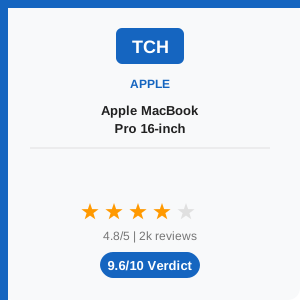
Apple MacBook Pro 16-inch M3 Max
M3 Max chip, 128GB unified RAM, 22hr battery, 16.2" Liquid Retina XDR, 16-core GPU. The creative workstation.
Check Price ↗ Full Review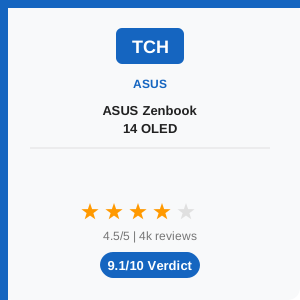
ASUS Zenbook 14 OLED (Intel Core Ultra)
2.8K OLED 120Hz, Core Ultra 7, 32GB, Thunderbolt 4, 1.3kg, 67Wh. OLED Windows ultrabook.
Check Price ↗ Full ReviewAt a Glance
| Apple MacBook Pro 16-inch M3 Max | ASUS Zenbook 14 OLED (Intel Core Ultra) | |
|---|---|---|
| 247Verdict Score | 9.6/10 | 9.1/10 |
| Owner Rating | 4.8★ (2,400) | 4.5★ (3,600) |
| Verdict | Outstanding | Excellent |
| RAM | 128GB unified | 32GB |
| Battery | 22 hours | 8-10 hours |
| Display | 16.2" ProMotion 120Hz XDR | 2.8K OLED 120Hz |
| Weight | 2.15kg | 1.3kg |
Quick Verdict
Both are strong choices, but the Apple MacBook Pro 16-inch M3 Max edges ahead with a 9.6/10 vs 9.1/10. M3 Max chip, 128GB unified RAM, 22hr battery, 16.2" Liquid Retina XDR, 16-core GPU. The creative workstation. That said, the ASUS Zenbook 14 OLED (Intel Core Ultra) is worth considering if 2.8K OLED 120Hz, Core Ultra 7, 32GB, Thunderbolt 4, 1.3kg, 67Wh. OLED Windows ultrabook..
Pros & Cons Side by Side
Apple MacBook Pro 16-inch M3 Max
- M3 Max with 128GB unified RAM handles simultaneous 4K video exports, ML training and Xcode compilation without throttling
- 22-hour battery while running M3 Max tasks — no power cable on international flights
- 16.2-inch ProMotion 120Hz Liquid Retina XDR display is the finest laptop display available
- Hardware-accelerated ML processing for ProRes video and Neural Engine workloads outperforms x86 competitors at 3x the power consumption
- The laptop that Apple sells to production studios, research labs and professional developers worldwide
- £4,500+ requires absolute professional justification — MacBook Pro 14 covers 90% of workflows
- 16-inch at 2.15kg is heavier than 14-inch M3 Pro for daily carry
ASUS Zenbook 14 OLED (Intel Core Ultra)
- 2.8K OLED 120Hz display at this price is extraordinary — Dell XPS charges more for a similar panel
- 32GB RAM at this price point is unusually generous — most competitors offer 16GB
- 1.3kg is lighter than most 14-inch Windows laptops
- Thunderbolt 4 ports enable dual 4K monitors and fast external storage
- ASUS ErgoLift hinge raises the keyboard for improved typing angle and airflow
- OLED burn-in risk with static taskbars and menu bars over years of use
- Intel Core Ultra battery life 8-10 hours trails MacBook Air meaningfully
- ASUS brand perceived as less premium than Dell XPS or Lenovo ThinkPad in enterprise
FAQ
Which is better, Apple MacBook Pro 16-inch M3 or ASUS Zenbook 14 OLED Ultra)?
Both are strong choices, but the Apple MacBook Pro 16-inch M3 Max edges ahead with a 9.6/10 vs 9.1/10. M3 Max chip, 128GB unified RAM, 22hr battery, 16.2" Liquid Retina XDR, 16-core GPU. The creative workstation. That said, the ASUS Zenbook 14 OLED (Intel Core Ultra) is worth considering if 2.8K OLED 120Hz, Core Ultra 7, 32GB, Thunderbolt 4, 1.3kg, 67Wh. OLED Windows ultrabook..
Is the Apple MacBook Pro 16-inch M3 worth the extra cost?
Yes — Apple MacBook Pro 16-inch M3 Max scores higher at 9.6/10 vs 9.1/10.
Also Worth Considering
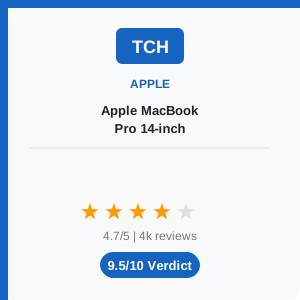
Apple MacBook Pro 14-inch M3 Pro
M3 Pro chip, 18GB unified RAM, ProMotion 120Hz OLED, 18hr, 1.55kg. The pro creative laptop.
Check Price ↗ Full Review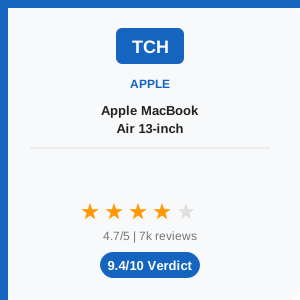
Apple MacBook Air 13-inch M3
M3 chip, 18hr battery, 13.6" Liquid Retina, fanless, 1.24kg. The best laptop for most people.
Check Price ↗ Full Review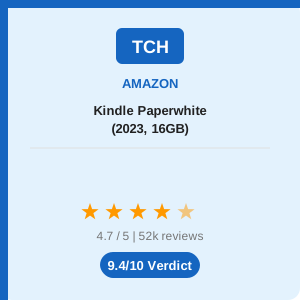
Kindle Paperwhite (2023, 16GB)
300 ppi, IPX8 waterproof, 12-week battery. The best e-reader for most people.
Check Price ↗ Full Review