Fujifilm X100VI Fixed-Lens Compact Camera vs Panasonic LUMIX G9 Mark II Mirrorless Camera (2026)
Which is better? We compared both on score, owner ratings, pros and cons.
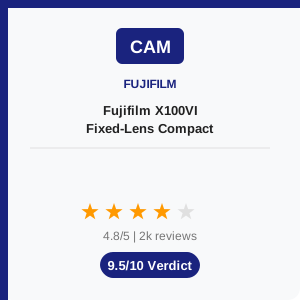
Fujifilm X100VI Fixed-Lens Compact Camera
40MP APS-C, IBIS, 23mm f/2, hybrid viewfinder, film sims, 6.2K video. The internet's favourite camera.
Check Price ↗ Full Review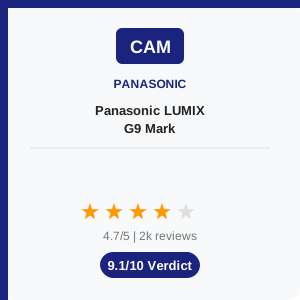
Panasonic LUMIX G9 Mark II Mirrorless Camera
25MP M4/3, Phase Detect AF, 75fps burst, 7.5-stop IBIS, IP53, 4K/120fps. Micro 4/3 flagship.
Check Price ↗ Full ReviewAt a Glance
| Fujifilm X100VI Fixed-Lens Compact Camera | Panasonic LUMIX G9 Mark II Mirrorless Camera | |
|---|---|---|
| 247Verdict Score | 9.5/10 | 9.1/10 |
| Owner Rating | 4.8★ (2,400) | 4.7★ (1,800) |
| Verdict | Outstanding | Excellent |
| IBIS | 6-stop (first in X100) | 7.5-stop (strongest reviewed) |
| Video | 6.2K | 4K/120fps |
Quick Verdict
Both are strong choices, but the Fujifilm X100VI Fixed-Lens Compact Camera edges ahead with a 9.5/10 vs 9.1/10. 40MP APS-C, IBIS, 23mm f/2, hybrid viewfinder, film sims, 6.2K video. The internet's favourite camera. That said, the Panasonic LUMIX G9 Mark II Mirrorless Camera is worth considering if 25MP M4/3, Phase Detect AF, 75fps burst, 7.5-stop IBIS, IP53, 4K/120fps. Micro 4/3 flagship..
Pros & Cons Side by Side
Fujifilm X100VI Fixed-Lens Compact Camera
- 40MP APS-C sensor delivers X-T5-level image quality in a coat-pocket-friendly body
- IBIS in the X100 series for the first time — 6-stop correction enables handheld shots in low light
- 23mm f/2 fixed lens is a classic street photography focal length — slightly wide, very versatile
- 18 film simulations produce JPEGs that require minimal post-processing — the Fujifilm aesthetic
- Hybrid optical/electronic viewfinder provides both traditional OVF for connection with the scene and EVF for precision
- Fixed 23mm — no zoom, no lens changes; requires accepting the focal length
- £1,500+ and currently limited supply — significant demand exceeds production
- Touchscreen is limited — a menu system learned over time
Panasonic LUMIX G9 Mark II Mirrorless Camera
- 7.5-stop IBIS — the strongest image stabilisation in any mirrorless camera reviewed
- 75fps mechanical burst for wildlife and action sequences requiring the highest capture rate
- Phase Detect AF resolves Panasonic's historical AF weakness — comparable to Sony and Canon
- IP53 weather sealing handles dust and rain for outdoor professional work
- 4K/120fps slow-motion with Panasonic's DCI cinema colour science
- M4/3 sensor — full-frame alternatives have physics advantages in extreme low light
- 75fps burst requires high-speed memory cards — additional cost for optimal performance
- Panasonic L-mount pricing was the professional tier — G9 II is the M4/3 alternative
FAQ
Which is better, Fujifilm X100VI or Panasonic LUMIX G9 Mark II?
Both are strong choices, but the Fujifilm X100VI Fixed-Lens Compact Camera edges ahead with a 9.5/10 vs 9.1/10. 40MP APS-C, IBIS, 23mm f/2, hybrid viewfinder, film sims, 6.2K video. The internet's favourite camera. That said, the Panasonic LUMIX G9 Mark II Mirrorless Camera is worth considering if 25MP M4/3, Phase Detect AF, 75fps burst, 7.5-stop IBIS, IP53, 4K/120fps. Micro 4/3 flagship..
Is the Fujifilm X100VI worth the extra cost?
Yes — Fujifilm X100VI Fixed-Lens Compact Camera scores higher at 9.5/10 vs 9.1/10.
Also Worth Considering
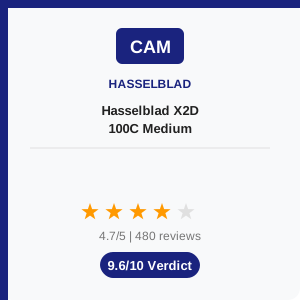
Hasselblad X2D 100C Medium Format Camera
100MP medium format, 16-stop dynamic range, 5-axis IBIS, 2.36M-dot EVF, CF Express. The imaging pinnacle.
Check Price ↗ Full Review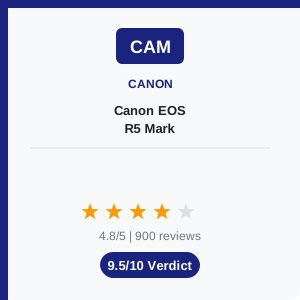
Canon EOS R5 Mark II Full-Frame Camera
45MP full-frame, 30fps, eye-control AF, 8K RAW video. The do-everything professional hybrid.
Check Price ↗ Full Review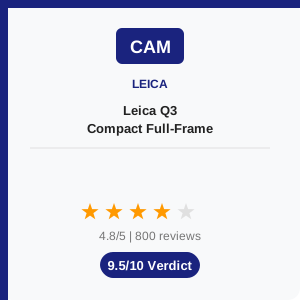
Leica Q3 Compact Full-Frame Camera
60MP full-frame, f/1.7 Summilux, 4K/60fps, PDAF, WLAN, iconic Leica red dot. The pocket full-frame legend.
Check Price ↗ Full Review